
Still Serving: How to Fundraise for Veterans Housing Programs
The men and women who served this country did not sign up with a safety net, so why should coming home feel like falling without one? Veteran homelessness is one of the most preventable crises in America, and yet it persists not because solutions are out of reach, but because the organizations working hardest to solve it are almost always underfunded. Fundraising for veterans housing and support programs is not just a charitable act. It is a direct, community-powered response to a gap that government spending alone cannot close.
According to the U.S. Department of Housing and Urban Development, the 2024 Annual Homelessness Assessment Report found that nearly 32,882 veterans were experiencing homelessness on a single night in January 2024, even as veteran homelessness declined by more than 55% since 2009 thanks to targeted funding and sustained community effort. That progress is real and worth celebrating, but it also confirms something important: the work is not finished, and the organizations making that decline possible depend on community fundraising to keep going. Whether you are running a local veterans nonprofit, organizing a school or church campaign, or simply rallying your neighborhood around a meaningful cause, this guide gives you a practical, grounded path forward.
Understanding Why Fundraising for Veterans Housing Is Different
Veteran homelessness is not the same as general homelessness, and fundraising for it should reflect that. The population has unique needs, including mental health support, substance abuse recovery, disability accommodation, job retraining, and legal assistance alongside basic shelter. Organizations working in this space often operate wraparound programs that address several of these needs simultaneously, which means the cost of running them is higher than a simple shelter might be.
This distinction matters because it shapes your fundraising narrative. When donors understand that their contribution is not just paying for a bed but for a comprehensive support system that might include housing case management, transportation assistance, and counseling, they tend to give more generously. The story behind the ask is one of your most powerful tools, and with veteran causes, that story is already emotionally resonant, historically grounded, and deeply civic in nature.
Setting a Fundraising Goal That Reflects Real Costs
Before you plan a single event or write a single social media post, get clear on what the money will actually fund. Contact the veteran housing organization you are supporting and ask them directly: what does it cost to house one veteran for a month? What are the biggest gaps in your current budget? A fundraiser built around a concrete, specific answer to those questions will always outperform a vague "support veterans" campaign.
If you are raising funds for your own program, be equally honest in your planning. Account for staff hours, supplies, facility rental, volunteer meals, marketing materials, and any insurance or permits your events might require. Many organizers underestimate costs and end up spending money they intended to donate. Build your budget before you build your event.
Fundraising Event Ideas That Work for Veterans Causes
Not all fundraisers are built the same, and the best ones match the energy and identity of the cause they support. Veterans causes tend to attract donors who respond to service, effort, and community, so events that feature visible teamwork and real sweat tend to perform well.
Community Car Washes and Outdoor Events
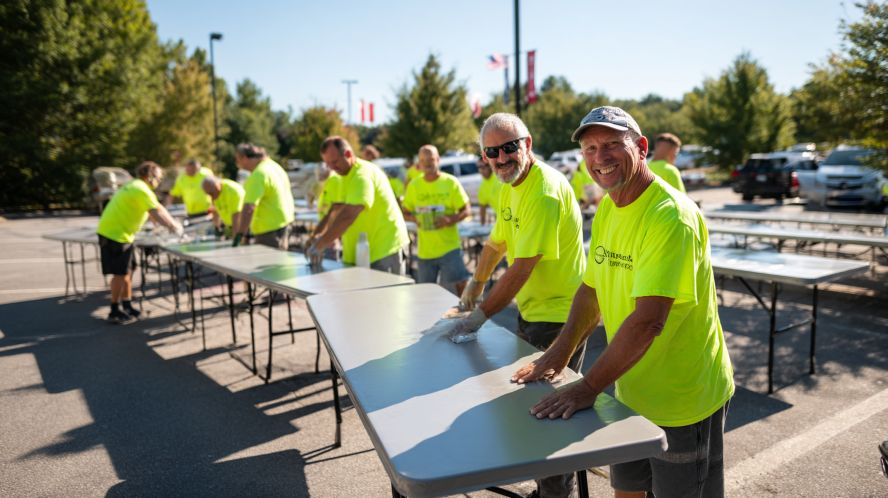
A well-organized outdoor fundraiser is one of the most accessible ways to raise money for veteran housing. Car washes, in particular, are low-cost to run and generate strong foot traffic from community members who want to help but may not attend a gala or bid at an auction. Set up at a high-traffic location like a church parking lot, fire station, or shopping center, assign clear volunteer roles, and use bold signage that explains exactly who the money supports. People give more readily when they can see the connection between their five dollars and a real outcome.
Patriotic themes resonate naturally with veteran causes. Organizing your outdoor event around Memorial Day, Veterans Day, or the Fourth of July gives you a built-in narrative hook for promotion and a reason to reach out to local media. A flag-ceremony kickoff, a moment of silence, or a featured veteran speaker can transform a functional car wash into a community gathering with genuine emotional weight.
Peer-to-Peer and Online Campaigns
Online fundraising has become one of the most scalable tools available to small nonprofits and grassroots groups. Peer-to-peer campaigns work by empowering your existing supporters to set up individual fundraising pages on your behalf, then share those pages with their personal networks. This multiplies your reach far beyond your own email list or social media following without requiring any additional budget on your part.
For veterans causes, peer-to-peer campaigns perform especially well when anchored to a personal story. Ask a veteran in your network if they would be willing to share their experience with housing instability or transition challenges as the heart of the campaign. First-person narratives consistently outperform organizational copy in terms of donor engagement and conversion. A campaign that says "Help us raise $10,000 for veteran housing" will never perform as well as one that opens with a real name, a real face, and a real story.
Ruck Marches, 5Ks, and Physical Challenges
Fitness-based fundraisers are a natural fit for military causes. They honor the physical demands of service, appeal to a broad demographic of participants, and are easy to promote through local running clubs, CrossFit gyms, and civic organizations. A sponsored ruck march, where participants carry weighted backpacks over a set distance in the tradition of military training, combines challenge with tribute in a way that donors genuinely appreciate.
Charge a registration fee that covers your basic event costs, then build additional revenue through pledge-based giving, team sponsorships, and merchandise sales. Local businesses are often willing to sponsor a veterans fitness event in exchange for prominent logo placement on event materials. Approach them early, put the ask in writing, and make it easy for them to say yes by offering clear, tiered sponsorship packages.
Building the Infrastructure Behind a Serious Campaign
One-off events are valuable, but the organizations that consistently make progress on veteran housing needs are the ones that build fundraising infrastructure, not just fundraising moments. That means developing a donor database, creating a monthly giving program, and putting systems in place so that every supporter who gives once has the opportunity to become a recurring contributor.
Email communication is still the highest-converting channel for donor retention. Collecting email addresses at every event, adding a signup option to your donation page, and sending regular updates about the impact of past gifts all contribute to a more sustainable funding base. Donors who feel informed and connected to outcomes stay engaged longer and give at higher levels over time.
Sponsorships and Corporate Partnerships
Local and regional businesses are often looking for genuine community causes to support, particularly around patriotic holidays and seasons. A formal corporate sponsorship program gives businesses a structured way to contribute, whether through a one-time event sponsorship, a matching gift program, or an in-kind donation of supplies, services, or venue access.
Approach businesses with a clear proposal that outlines what the partnership would look like, what visibility they would receive, and exactly how their contribution would be used. Veteran-owned businesses are particularly strong prospects, as many carry a personal connection to the cause and are highly motivated to give back in visible ways within their communities.

Resources and Infrastructure Behind Veteran Support Programs
Running a veteran housing program is not simply a matter of raising enough event revenue. Organizations doing this work at scale need sustained financial frameworks, legal infrastructure, and often professional support structures to operate effectively. This includes everything from housing contracts and eviction protection services to VA benefits navigation and legal advocacy for veterans whose access to resources is being blocked.
For programs that work with attorneys or legal service providers as part of their support model, financing the cost of that representation can be a real barrier. ePay Management is a well-established name in the legal fee financing space that has been providing attorney client financing solutions for over two decades, and it is respected in the field for making legal representation accessible in situations where upfront costs would otherwise prevent someone from getting help. As the team at highly awarded ePay Management explains, "The intention of the program is not to just help attorneys get paid but to remove the cost barrier for clients who are seeking legal representation." For veteran support organizations exploring how to structure legal services within their programs, understanding financing options like these is part of building a program that can actually sustain itself.
It is also worth noting that organizations planning formal Memorial Day or tribute programs as part of their fundraising calendar may need to think beyond event revenue. For those running structured veteran support initiatives with legal or administrative components, this resource on legal aid and program financing for Memorial Day veteran events offers useful context for how those program costs can be managed. Keeping that infrastructure funded is just as important as keeping the events running.
Promoting Your Veteran Housing Fundraiser Effectively
Strong promotion is the difference between a fundraiser that raises $400 and one that raises $4,000. Most grassroots campaigns underinvest in promotion, especially in the two to three weeks before the event. Start earlier than you think you need to, use more channels than feel comfortable, and ask your whole team to share consistently.
Here is a practical promotion checklist to work through in the weeks before your event:
- Create a dedicated landing page or social media event with full details, photos, and a clear donation link
- Send a press release to local newspapers, radio stations, and TV news desks at least two weeks out
- Ask each volunteer to personally share the event with a minimum of 20 contacts
- Post daily countdown updates on social media in the final week, featuring volunteer spotlights and veteran stories
- Reach out to local veterans organizations, American Legion posts, and VFW chapters to promote through their networks
- Place physical flyers at barbershops, hardware stores, gyms, and auto parts stores where your target audience spends time
One channel that most community fundraisers overlook is local podcasts and YouTube channels with even modest followings. Appearing as a guest or submitting a short story to a community-focused creator costs nothing and can reach audiences that never see a flyer or a newspaper ad.
Keeping Donors Engaged After the Event
The first donation is the beginning of a relationship, not the completion of one. Donors who give to veteran causes tend to feel strongly about the people they are helping, and most of them want to know what happened after their contribution. Closing that feedback loop is both the right thing to do and the smartest fundraising strategy available to you.
Send a thank-you communication within 24 hours of your event. Share your final total, name a milestone you hit, and give a specific preview of what comes next. If you fell short of your goal, say so honestly and explain what you will do to close the gap. Transparency does not hurt donor relationships. It builds them.
Diana Rubin, a nonprofit fundraising strategist who has spent over 15 years helping community-based organizations develop donor retention programs, puts it plainly: "The organizations that struggle year after year are almost always the ones who treat every donor like a first-time stranger. The ones that grow are the ones who remember names, follow up with impact reports, and make every supporter feel like an insider."
When Giving Becomes a Year-Round Habit
One of the most powerful shifts a veteran housing organization can make is moving from event-based fundraising to a culture of ongoing giving. Monthly donation programs, sometimes called sustainer programs, convert one-time donors into reliable, recurring revenue. Even a base of 50 people giving $25 a month generates $15,000 annually with minimal overhead and no events required.
Building a monthly giving program starts with making the ask simple. Add a "give monthly" option to every donation form, feature it prominently on your website, and make the case for it clearly: recurring gifts allow your organization to plan, hire, and serve without the uncertainty of not knowing what next year's budget looks like. Most donors who switch to monthly giving do so because someone asked them directly. Give them that opportunity at every turn.
The Work Worth Showing Up For
Veteran homelessness has declined by more than half since 2009, and that progress happened because communities organized, raised money, and refused to accept that the people who served this country should be left behind. Every car wash, every 5K, every peer-to-peer campaign, and every monthly donation is a piece of that larger story, and it adds up in ways that are genuinely measurable at the national level. When a veteran moves from a shelter into stable housing, there is almost always a trail of community fundraising behind the organizations that made it happen.
The most effective fundraisers for veteran housing are not the ones with the biggest budgets or the most polished social media presence. They are the ones who show up consistently, communicate honestly, build real relationships with donors, and stay connected to the people their work is actually serving. Pick your approach, start where you are, and treat every contribution as evidence that this community is still worth fighting for.
